
 +251-925963212
Lake Tana
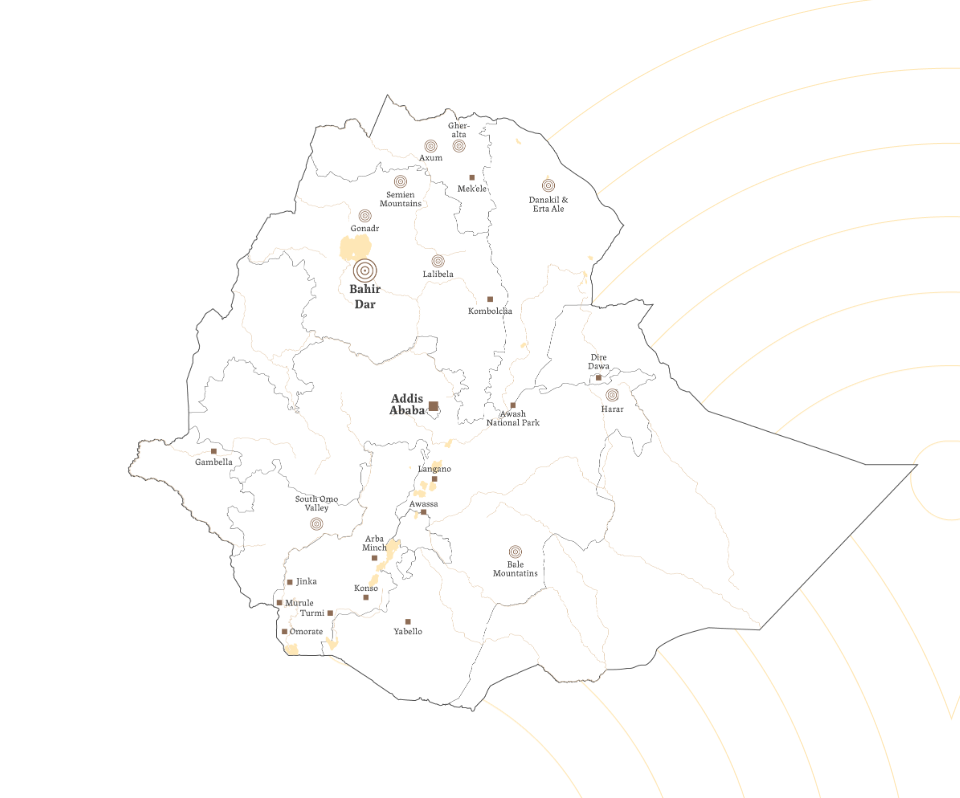
Lake Tana at a glance
Lake Tana is the biggest lake in Ethiopia, accounting for a staggering 50% of all inland water in the country.
The flora and fauna found within its murky depths have led to Lake Tana’s nomination as a UNESCO Biosphere Reserve.
Surrounding the lake lies one of the largest networks of wetlands in Africa. These wetlands see huge annual bird migrations, and the lake itself has large populations of Great White Pelicans.
There are dozens of islands found on Lake Tana, and many are home to 14th Century monasteries complete with ancient ornaments, frescoes, and fascinating wall paintings.
Discover Ancient Monasteries on Lake Tana
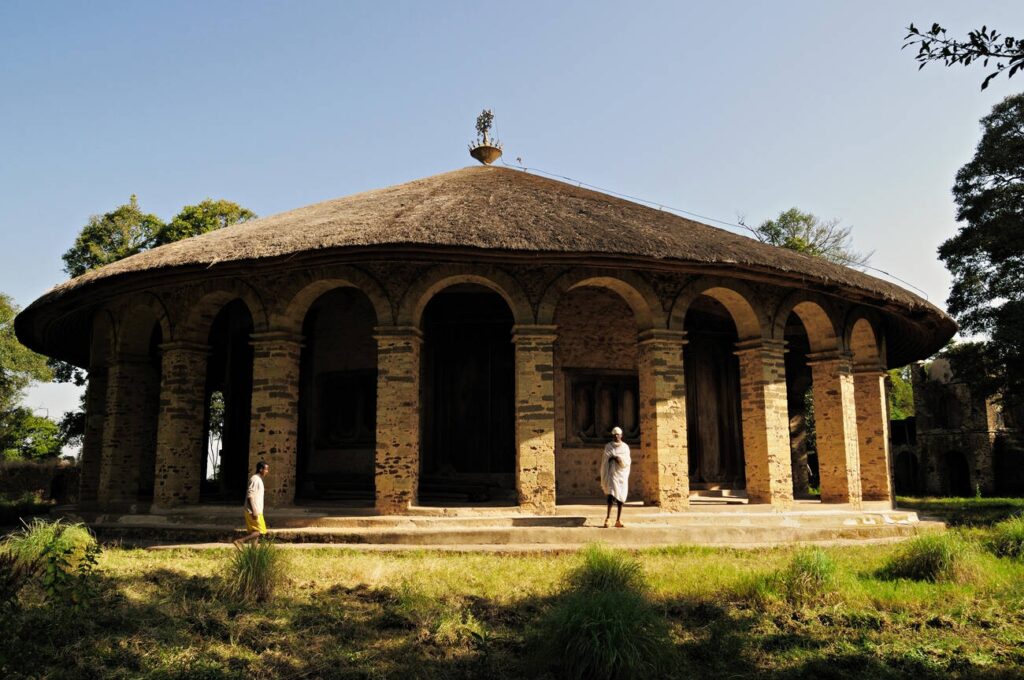
Lake Tana is most famous for its ancient island monasteries.
Accessible via a short boat trip from the shores of the lake, these monasteries are a window into a bygone era, and stepping off the boat to explore these relics of history is like wandering into a land lost to time.
There are dozens of island monasteries, but only eight are open for public viewing. You can explore the monasteries over the course of a morning or afternoon.
Monasteries of Lake Tana
Tana Cherkos, nestled within a dark dense forest, is a small island temple that once held a much bigger secret behind its cold stone doors.
For over 800 years, it was thought that this temple was home to the Ark of the Covenant. The very place it was held can still be seen today.
Is it true? We would say that’s beside the point. Facts of Ethiopian history are very often wrapped up in myth, legend, and folklore – but that’s all part of the fun.
What is undeniable is the magic of the monasteries like Tana Cherkos. Spend just a few minutes here and your mind begins to get lost in curiosity – who built this church? How did they build it? What compelled them to paint these elaborate biblical stories from floor to ceiling? What was life like back when this monastery was built?
Narga Selassie is one of the more photogenic temples on Lake Tana. Narga Selassie translates to ‘Trinity of the Rest’, and was built on the peaceful Dek Island – the largest island on the lake. The church is built in a picturesque clearing, and you can’t help but feel a sense of calm as you wander the grounds. It’s no wonder religious ascetics chose to build their place of worship on Dek islands.
Perched 100m above Laka Tana, the mountain monastery Daga Estefanos offers some of the best views over Lake Tana and beyond.
A short trek up a narrow winding path from the shore, this monastery is one of the most decorated and celebrated, with a long history dating back to the 16th century.
Within its dusty vaults and crumbling catacombs lies the mummified remains of five former Ethiopian emperors, still adorned in brightly coloured ceremonial robes, silently guarded by a fresco of the Madonna affixed to the wall above the tombs.
A scene straight out of the next Indiana Jones film.
Unfortunately, only men are permitted within the wall of this monastery, but the view from the trail is not to be missed.
One of the biggest monasteries in the region, Ura Kidane Mehret is known for its beautifully painted, psychedelic murals that run the perimeter of its circular straw walls.
Just 25 minutes’ walk from the boat landing point, Ura Kidane Mehret is one of the more accessible churches in the region and is by far the most popular.
Concealed behind tall shady palm trees and densely planted coffee farms, the monastery houses, vibrant frescoes depicting scenes from Ethiopian folklore and Christianity.
Both men and women are permitted entry and there is a small museum on-site, called the Zege Satekela Museum. Here you can learn about the hand-crafted tools and musical instruments that helped shape this vibrant land and that are still in use today.
The round, thatched roof of the Azuwa Maryam Monastery along the Zege Peninsular makes this church one of the most aesthetically pleasing.
Like all the monasteries on the lake, inside you will find a series of spell binding frescoes sure to send a smile across the face of even the biggest miserabilists.